
Colombia’s government is expected to decree a 23.7% minimum wage hike for the second time after allegedly obtaining the support of a majority of labor unions and business associations.
The State Council, Colombia’s highest administrative court, ordered the government to issue a transitional decree after provisionally suspending the initial minimum age hike that was decreed in December.
The court is studying legal challenges, claiming that the government went too far in trying to secure what they consider a living wage for minimum wage workers.
The December decree was issued after annual conciliation meetings between government, labor unions and business associations failed to produce an agreement between the unions and the business representatives.
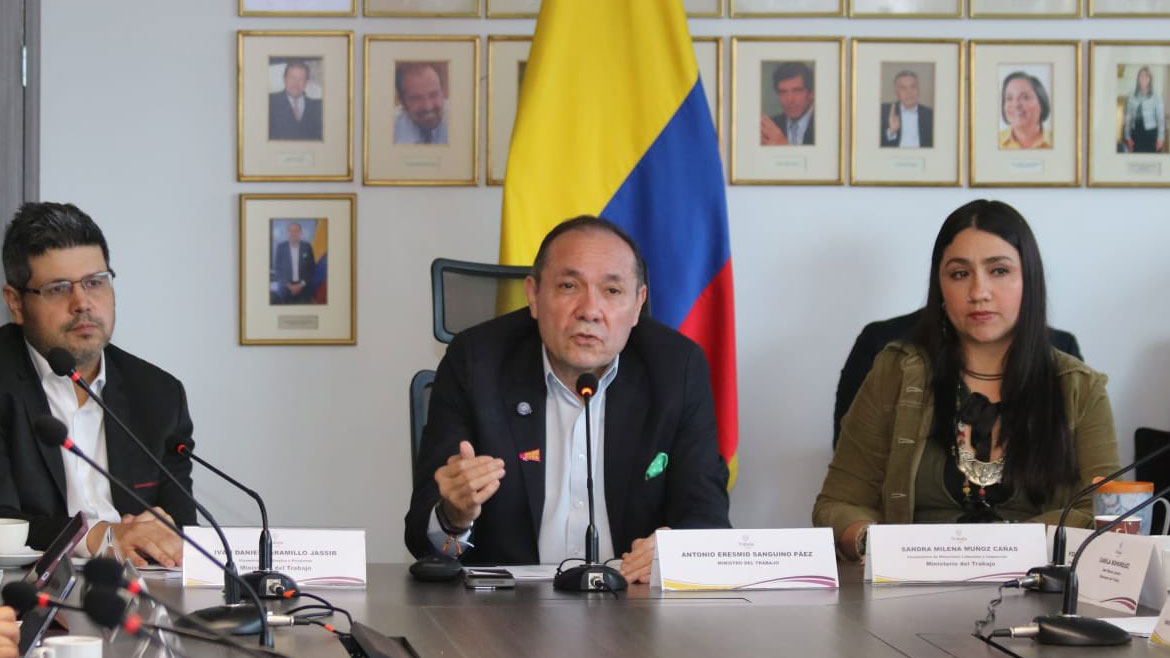
Monday’s meeting resulted in a majority support for the minimum wage hike, according to Labor Minister Antonio Sanguino.
The minister suggested that some of the business associations ceded to “not generate or incentivize uncertainties in the Colombian market as [the wage increase] was already incorporated in the business dynamics.”
Sanguino reportedly agreed to implement previously promised support for businesses that can’t afford to pay their workers a living wage.
In an address to the nation, President Gustavo Petro said Sunday that his government would maintain a minimum wage and provide the State Council with evidence that preliminary indicators suggest that this doesn’t threaten either employment or inflation.
Notoriously reactionary business association Comfenalco warned in December that the minimum wage hike would lead to the loss of 700,000 jobs.
Minimum wage hikes decrees by the government in previous years did not result in job losses.
In fact, Colombia’s unemployment rate dropped to 8% in December, the third lowest ever registered by statistics agency DANE.