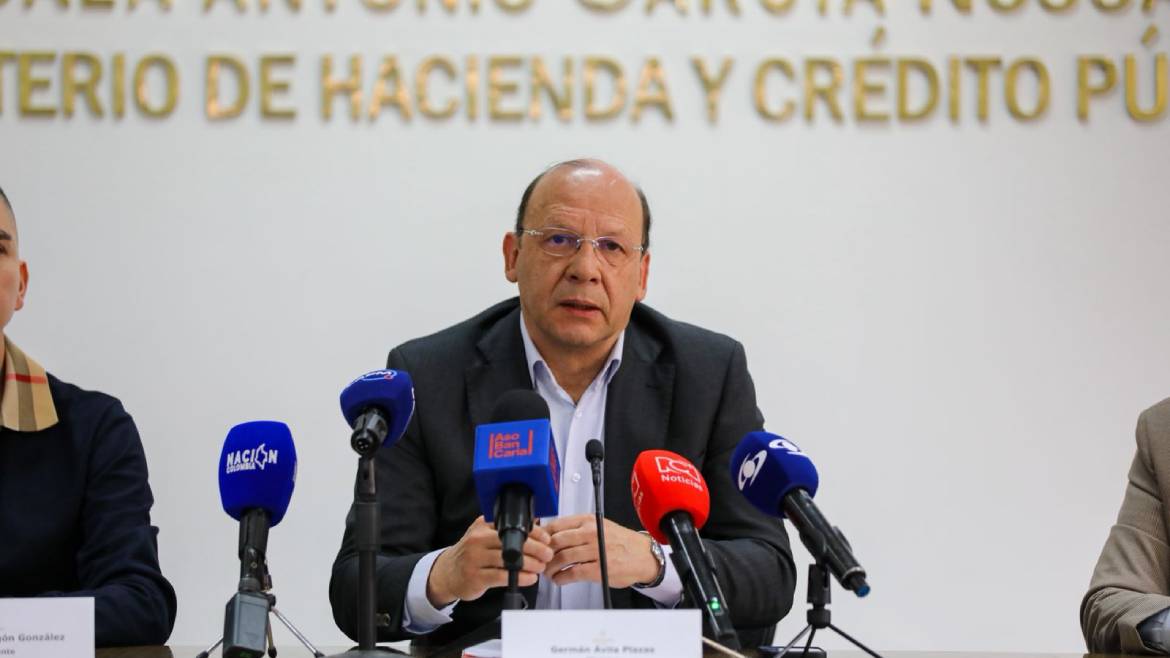

Colombia’s Finance Minister German Avila walked out of a meeting with the Central Bank’s board of directors after they decided to increase the bank’s interest rate.
At a press conference, Avila said that the bank’s decision to increase the interest rate with one percentage point to 11.25% “will have a sustained and significant impact on the country’s economic dynamics.”
According to the minister, the board’s monetary policy “serves only the interests of a small group of investors and representatives of the financial sector.”
Avila said he would only agree to reduce the “significant distance” between the government and the central bank once the latter “understands there must be coherence with the economic and social reality of the country.”
In a separate press conference, Central Bank president Leonardo Villar said the minister would be neglecting his legal obligations if he misses the next meeting.
Villar said that the bank decided to increase the interest rate in response to relatively high inflation rate, which increased 0.1 percentage point to 5.5% in February.
According to the bank, increasing the interest rate will dampen consumption, and consequently lower the inflation rate.
The government, which follows a different economic philosophy, claims that the inflation is due to supply problems, like the war in Iran, and that increasing the interest rate will only impede economic growth.
President Gustavo Petro supported his finance minister and said that the central bank “hopes to ruin our good economy so we lose elections.”
The clashes between the bank and the government have been escalating since Petro took office in 2022 and pushed the president to suggest ending the bank’s independence, effectively forcing it to prevent ideological clashes with whoever is in government.
Related posts: