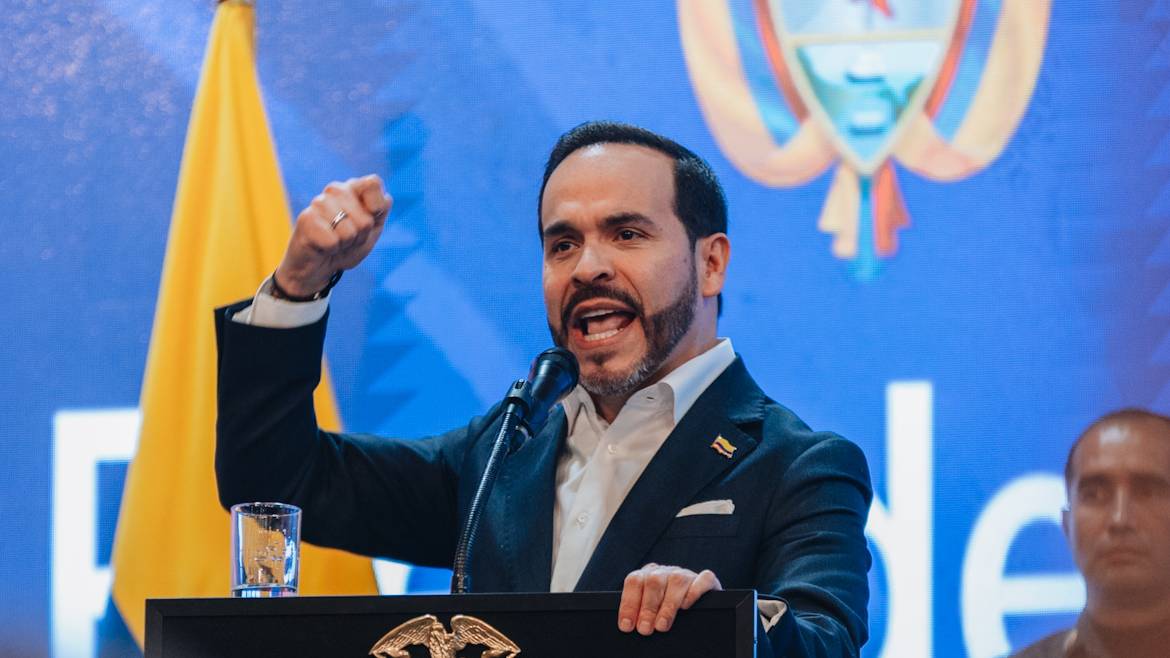

The government of President Abelardo de la Espriella will present Colombia’s Congress with a comprehensive “counterterrorism statute,” which would give authorities enhanced powers to fight designated terrorist organizations.
A 116-page draft bill, which was leaked to Caracol Radio, would facilitate a military approach to combat illegal armed groups and organized crime groups, for example through air strikes.
The Antiterrorism Statute would additionally create a National Registry of Terrorist Organizations and Actors, which would make it easier to freeze the assets of suspected terrorists and their financiers.
Last but not least, the bill creates a presidential Terrorism Commissioner and a special prison regime for leaders of designated terrorist organizations.
Broader definition of terrorism
The bill seeks to change Colombia’s criminal law and define terrorism as any individual or collective conduct that produces “fear, panic or terror, creating risks, threats or the use of violence.”
A technical body of the National Security Council (NSC) will advise the council on the inclusion of organizations or individuals that ought to be included to its public National Registry of Terrorist Organizations and Actors.
Anyone who believes he was falsely put on the terror list can challenge this decision before the NSC and the Council of State, Colombia’s top administrative court.
The bill additionally seeks that “the Council of State shall hear, in the first instance, constitutional protection lawsuits filed against the President of the Republic or against defense authorities for acts or omissions related to operations by law enforcement agencies to preserve national security.”
This would make the suspension of military operations more difficult for citizens, who now can seek legal support to protect their constitutional rights at lower courts.
The bill also creates new crimes and modifies the penalties for conduct related to “terrorism,” such as the use of drones, illegal mining, oil theft, the extraction and sale of gold, kidnapping, smuggling, human trafficking, drug trafficking, extortion, cybercrimes, election crimes, riots, and attacks on critical infrastructure.
In the case of riots, “the penalty shall be increased by up to double when the riot is directed against law enforcement units conducting operations; or is carried out in conjunction with listed terrorist organizations.”
The bill also allows Colombian authorities to investigate and prosecute terrorism, terrorism financing or providing material support for terrorist organizations abroad.
High Counterterrorism Commissioner
The bill additionally seeks to expand presidential powers to create the Office of the High Counterterrorism Commissioner.
The expanded power would additionally give De la Espriella six months to regulate the powers of this new advisory office and to appoint its first commissioner.
Related posts: