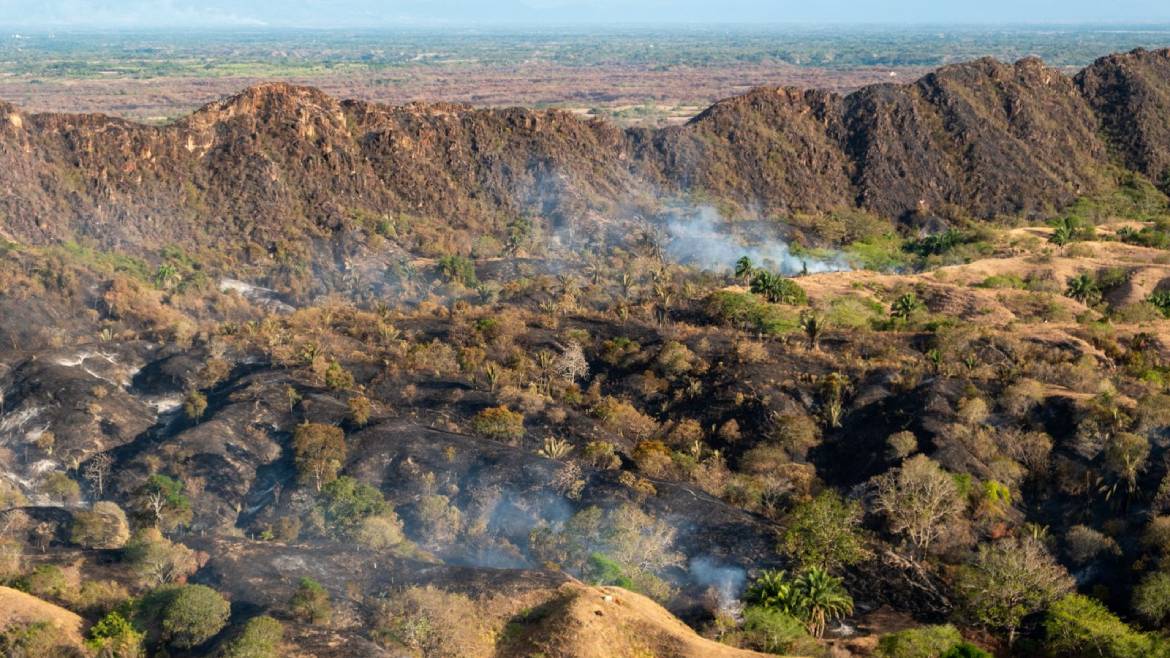

Colombia’s meteorological institute IDEAM officially declared the arrival of El Niño, and warned that the climate phenomenon could trigger water shortages and forest fires.
In a press statement, the IDEAM said that its “confirmation reflects the sustained warm conditions in the Pacific Ocean, which, according to the latest measurement, broke records, reaching a sea surface temperature anomaly of +3.49°C.”
The meteorological institute said it expected that El Niño could continue to disrupt local climate patterns until March next year.
Initially, the weather phenomenon is expected to reduce rainfall between October and December, which is normally the rainy season in large parts of the country.
“Given this situation, and in light of the alerts issued since the beginning of the year, the national government launched an interagency response,.. with specific instructions for the responsible agencies to have their contingency plans formulated and activated by November 30 at the latest,” said the President’s Office in a statement.
The National Unit for Disaster Risk Management (UNGRD) coordinates response capabilities across the country and enhances the monitoring of wildfires using satellite technology. For its part, the Ministry of Environment and Sustainable Development is taking steps to protect strategic ecosystems, water sources, and the most vulnerable areas.
President’s Office
The Mining Ministry “is implementing an emergency plan aimed at ensuring the country’s energy security by strengthening thermal power generation, securing fuel supplies, and implementing efficiency and conservation measures,” according to the President’s Office.
EPM, the local utilities firm in Medellin, has been testing the effectiveness of water rations as they fear the lack of rain could affect the hydro-electric power plants that provide the northwest of Colombia much of its energy.
Before leaving office on August 7, former President Gustavo Petro ordered the mass purchase of solar panels to reduce the pressure on the electric grid.
Related posts: