
Colombia’s President Abelardo de la Espriella declared a national disaster and sent his ministers to the west of Colombia to coordinate rescue operations in response to a 7.4M earthquake.
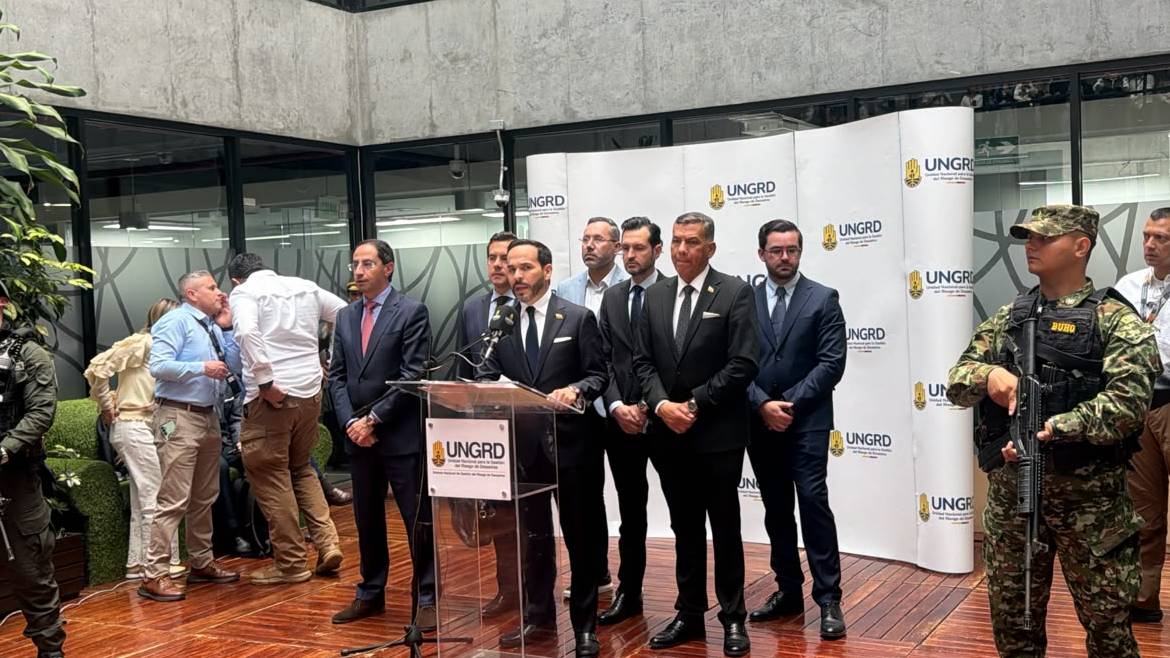
Following an emergency meeting at disaster management agency UNGRD, De la Espriella said he would travel to Pereira, one of the worst hit cities, to further coordinate the government response.
Interior Minister Rodrigo Lara would coordinate rescue operations for the rest of the coffee region, the health and defense ministers would travel to the Choco and Transport Minister Elsa Noguera would coordinate efforts in Valle del Cauca from Cali.
De la Espriella canceled plans he had to visit La Guajira, a northern province that wasn’t affected by the earthquake.
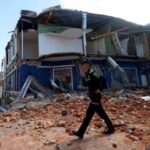
Throughout the morning, local and regional media reported dozens of collapsed buildings in multiple cities in Valle del Cauca, the coffee region and Choco.
More than 110 people were killed and dozens were injured because of the earthquake, De la Espriella said at a press conference.
The earthquake damaged more than 1,500 homes and destroyed 37. Sixty-one buildings collapsed and 18 healthcare centers suffered damage as well as 52 schools and 17 community centers.
The roof of the Pereira airport also came down and five other airports in western Colombia reported damages, said the president.
According to the National Police, road travel has been complicated because of landslides and fallen trees.
The government has yet to report on missing persons.
“Right now, the most important thing is to protect lives, rescue those who remain trapped, treat the injured, and bring aid to the hardest-hit communities,” said Vice-President Jose Manuel Restrepo.
“United we will overcome this emergency,” Restrepo added.
The vice-president, together with Foreign Minister Omar Bula, will coordinate foreign aid.
According to the Colombian Geological Service, the earthquake was the strongest in Colombia of the past decade and the strongest in the west of the country since 1979.